The digital landscape has transformed dramatically over the past few years. We’re living in an era where artificial intelligence isn’t just a futuristic concept—it’s woven into the fabric of our daily lives. And nowhere is this more apparent than in the world of AI chatbots.

Enter Janitor AI.
This platform has carved out a unique space in the conversational AI ecosystem, offering something different from your typical corporate chatbot. It’s raw, it’s customizable, and it’s generating quite the buzz among users who want more control over their AI interactions.
What Makes Janitor AI Different?
Let me paint you a picture. Imagine you’re tired of the sanitized, overly cautious responses from mainstream AI assistants. You want something with personality. Something that feels less like talking to a customer service robot and more like engaging with a character that has depth, quirks, and maybe even a sense of humor that doesn’t feel programmed.
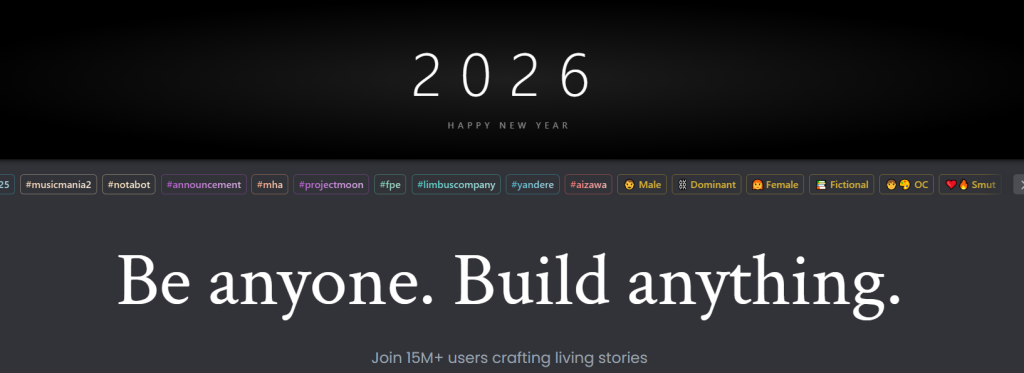
That’s Janitor AI’s appeal.
Unlike many AI platforms that prioritize safety guardrails above all else, Janitor AI has positioned itself as a more open platform. Users can create and interact with characters that have distinct personalities, backgrounds, and conversational styles. The platform doesn’t shy away from mature content, which has made it particularly popular among adult users seeking unrestricted conversations.
But here’s the thing—it’s not just about the lack of filters. It’s about creativity and customization.
The Character Creation Revolution
One of Janitor AI’s standout features is its character creation system. This isn’t a simple “pick a personality type” situation. We’re talking about detailed character building that would make a novelist jealous.
Users can craft characters with:
- Specific personality traits and behavioral patterns
- Detailed backstories that inform their responses
- Unique speaking styles and mannerisms
- Defined relationships to the user
- Particular knowledge domains or expertise areas
I’ve seen users create everything from historical figures to fantasy characters, from anime personalities to completely original creations. The depth is remarkable. One user spent hours perfecting a character modeled after a Victorian-era detective, complete with period-appropriate speech patterns and knowledge limitations. Another created a supportive mentor character who helps them work through coding problems with patience and encouragement.
The platform essentially becomes a canvas for imagination.
How Janitor AI Actually Works
Under the hood, Janitor AI operates on a fascinating technical foundation. The platform itself doesn’t host its own language model—instead, it acts as an interface that connects to various AI APIs. This is crucial to understand.
Initially, Janitor AI primarily used OpenAI’s API, which meant users needed their own API keys to make the system work. This presented both advantages and challenges. The advantage? Users had direct control and could manage their usage costs. The challenge? It created a barrier to entry for less technical users.
The process looked something like this: You’d create an account on Janitor AI, design or select a character, obtain an API key from OpenAI or another provider, configure the connection, and then start chatting. For some people, this technical setup was empowering. For others, it was frustrating.
But the platform has evolved. Janitor AI began developing its own API solution to simplify the user experience. This meant newcomers could jump in without needing to understand API configurations or manage separate billing accounts. Just sign up and chat.
The architecture is actually quite clever. By separating the interface from the language model, Janitor AI can theoretically integrate with multiple AI providers, giving users flexibility in choosing their preferred backend technology.
The User Experience: What’s It Like?
Let’s get practical. What does actually using Janitor AI feel like?
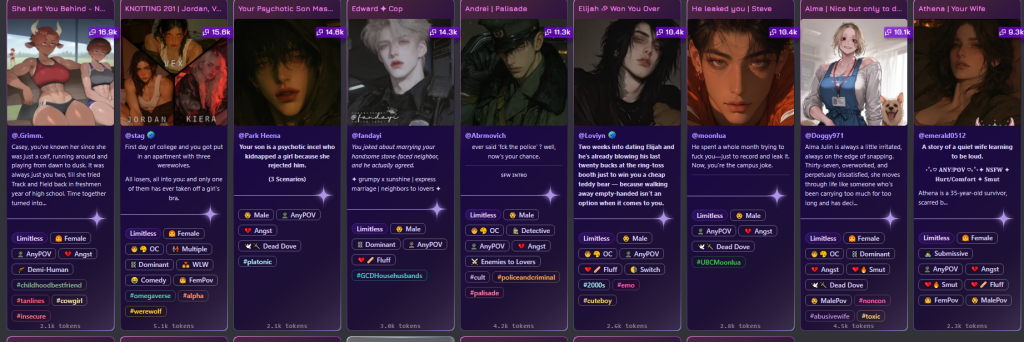
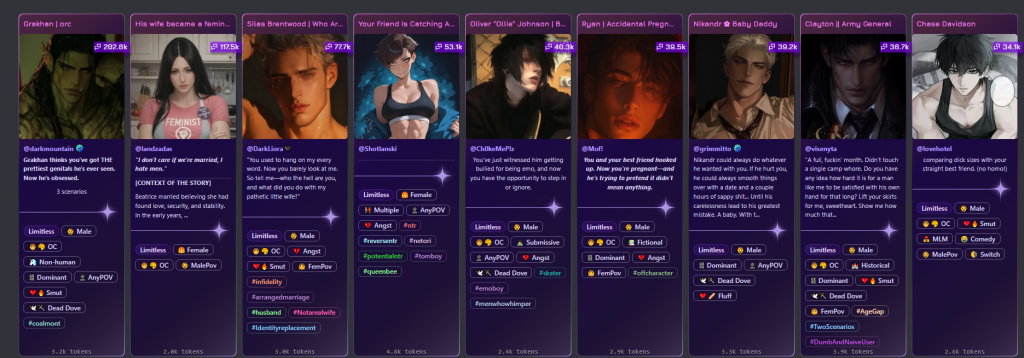
The interface is straightforward, almost minimalist. You’re presented with a character selection screen that feels a bit like browsing a dating app—cards with character images, brief descriptions, and tags indicating their traits or themes. Click on a character that intrigues you, and you’re dropped into a chat interface.
The chat window is clean. No clutter. Just you and the character.
The responses can be remarkably coherent and personality-consistent, especially if the character has been well-designed. I’ve had conversations where I genuinely forgot I was talking to an AI because the character’s personality came through so strongly. There’s something oddly compelling about chatting with a character who remembers previous conversations and references them naturally.
But let’s be honest about the limitations too. Sometimes responses can feel generic or break character. The AI might occasionally misunderstand context or provide responses that don’t quite fit the established personality. This happens less frequently with well-crafted characters, but it’s still a reality of current AI technology.
Response times vary depending on which API you’re using and server load. Sometimes it’s nearly instantaneous. Other times, you’re waiting several seconds. It’s not a dealbreaker, but it’s worth mentioning.
The Community Aspect
Here’s something I find genuinely interesting about Janitor AI—the community that’s formed around it.
Users don’t just create characters for themselves. They share them. The platform has become a sort of collaborative storytelling space where people contribute their creations for others to enjoy. It’s not unlike fan fiction communities, but interactive.
You’ll find detailed character databases where creators pour their hearts into designing compelling AI personalities. Some users have become known for their particular style of character creation. There are creators who specialize in historically accurate figures, others who excel at anime-style characters, and still others who create elaborate fantasy world inhabitants.
The comments sections under popular characters read like reviews. “This character really helped me through a tough time,” one user wrote. “The responses felt genuinely encouraging.” Another commented, “The historical accuracy is impressive—feels like talking to someone who actually lived in that era.”
But the community also grapples with challenges. Content moderation becomes tricky when you’re dealing with user-generated characters. What’s acceptable? Who decides? The platform has had to navigate these questions while trying to maintain its identity as a more open alternative to mainstream AI assistants.
Privacy and Safety Considerations
We need to talk about the elephant in the room: privacy and safety.
When you’re having deeply personal conversations with an AI—and some users absolutely do—where does that data go? This is a legitimate concern. If you’re using an external API like OpenAI’s, your conversations are being processed by that company’s servers. They have data retention policies and terms of service that govern how your information is handled.
Janitor AI itself also collects data. Understanding the privacy policy is essential, particularly if you’re sharing sensitive information in your chats.
Then there’s the content question. Because Janitor AI allows more mature content than many mainstream platforms, users need to be aware of what they’re engaging with. The platform does implement some safeguards and content warnings, but it’s ultimately more permissive than alternatives.
For younger users or those uncomfortable with mature content, this might not be the right platform. And that’s okay. Different tools serve different audiences.
The Technical Side: APIs and Costs
If you’re considering using Janitor AI, understanding the technical and financial aspects is important.
When using external APIs, you’re paying for the tokens processed by the AI model. A token is roughly equivalent to a word or part of a word. Longer conversations consume more tokens, which means higher costs. For casual users having occasional chats, the costs might be minimal—maybe a few dollars a month. For power users engaging in lengthy daily conversations, it could add up.
Different AI models have different pricing structures. GPT-3.5 is generally cheaper but less sophisticated. GPT-4 provides better responses but costs significantly more per token. Users need to balance quality with budget.
Janitor AI’s own API solution changes this dynamic by offering subscription-based pricing, which can be more predictable than pay-per-token models. You know exactly what you’re paying monthly, regardless of usage volume.
Setting up API keys involves creating an account with the AI provider, adding payment information, generating an API key, and then inputting that key into Janitor AI’s settings. It’s not terribly complicated, but it does require following instructions carefully. One misplaced character in the API key, and nothing works.
Practical Applications and Use Cases
Why do people actually use Janitor AI? The reasons are surprisingly diverse.
Creative Writing Support: Many writers use character interactions to develop personalities for their stories. Having a conversation with an AI version of their character helps them understand how that character would respond in different situations.
Language Practice: Some users create characters who speak in foreign languages, using the platform as an immersive language learning tool. Conversing with a native-speaker character provides practice in a low-pressure environment.
Emotional Support: This one’s more controversial, but it’s real. People dealing with loneliness, anxiety, or depression sometimes find comfort in consistent, judgment-free conversations. It’s not therapy—let’s be clear about that—but for some, it’s a helpful supplement to human connection.
Roleplay and Entertainment: Whether it’s fantasy scenarios, historical reenactments, or just playful interaction, people enjoy the entertainment value of character-based conversations.
Learning and Exploration: Creating a character who’s an expert in a particular field—philosophy, science, history—can facilitate educational conversations. It’s like having a tutor available 24/7.
One user told me they created a character based on their late grandmother, incorporating her speech patterns and the advice she used to give. “I know it’s not really her,” they said, “but sometimes I just need that voice telling me everything will be okay.”
That’s powerful. And a bit heartbreaking. And very human.
Comparing Janitor AI to Alternatives
The AI chatbot space is crowded. Character.AI, Replika, Chai, and others all compete for users’ attention. So where does Janitor AI fit?
Character.AI offers a similar character-based interaction model but with stricter content filters. It’s more family-friendly but less flexible for users wanting unrestricted conversations.
Replika focuses on building a personal AI companion that learns from you over time. It’s more about the relationship with one AI than interacting with multiple characters.
Chai emphasizes mobile-first design and ease of use, making it accessible but perhaps less feature-rich for power users.
Janitor AI’s positioning is clear: maximum customization and minimal restrictions. This appeals to a specific user base willing to navigate some technical complexity for greater freedom.
The Future of Janitor AI
Where is this platform headed? That’s the million-dollar question.
The AI landscape is evolving rapidly. New models emerge constantly, each more capable than the last. Janitor AI’s architecture potentially allows it to integrate these advancements, offering users access to cutting-edge AI technology through a familiar interface.
The platform’s developers seem focused on reducing barriers to entry while maintaining the customization that attracted users initially. The proprietary API development suggests a move toward sustainability and user-friendliness.
But challenges remain. Content moderation at scale is difficult. Competition is fierce. User expectations continue to rise as AI capabilities improve.
The platform will need to balance openness with responsibility, technical sophistication with accessibility, and innovation with stability.
Getting Started with Janitor AI
If you’re intrigued and want to try Janitor AI yourself, here’s a practical roadmap.
First, visit the Janitor AI website and create an account. The signup process is straightforward—email, password, the usual drill.
Next, decide on your API approach. Are you comfortable setting up an external API, or would you prefer the platform’s built-in solution? Each has trade-offs in cost and complexity.
If going the external route, create an account with your chosen AI provider, set up billing, and generate an API key. Then, in Janitor AI’s settings, input that key and test the connection.
Browse the character catalog. Don’t rush this part. Read character descriptions carefully. Check user reviews. The right character makes all the difference in your experience.
Start a conversation. Don’t overthink it. Just begin chatting naturally. See how the character responds. Adjust your approach based on the interaction.
If you’re feeling creative, try making your own character. Start simple—maybe model one after someone you know or a fictional character you love. Refine the personality parameters based on how conversations go.
The Bigger Picture
Janitor AI represents something larger than just another chatbot platform. It’s part of a broader conversation about AI’s role in human life.
We’re increasingly comfortable with AI as conversational partners, therapists, teachers, and companions. This raises philosophical questions. What does it mean to have meaningful interactions with non-human entities? How do these relationships affect our human connections?
There’s no simple answer. Some worry that AI companions encourage social isolation. Others argue they supplement human relationships, providing support when humans aren’t available.
What’s undeniable is that tools like Janitor AI are meeting genuine human needs. Whether that’s creative expression, emotional support, entertainment, or simple curiosity about AI capabilities, people are finding value.
Final Thoughts
Janitor AI isn’t perfect. The platform has technical quirks, privacy considerations, and content questions that users must navigate thoughtfully. It requires some technical know-how or willingness to learn. The quality of experience varies significantly based on character design and user expectations.
But for those seeking customizable, character-based AI interactions with fewer restrictions than mainstream alternatives, it offers something valuable. The creative possibilities are genuinely exciting. The community aspect adds a collaborative dimension. And the technology continues improving.
Is it right for you? That depends on what you’re looking for, your comfort with the platform’s approach to content, and your technical aptitude. Research thoroughly. Start slowly. See if it meets your needs.
The world of conversational AI is still young. Platforms like Janitor AI are experiments in what’s possible when you give users creative control over their AI interactions. Where this leads, we’re all still discovering together.
And honestly? That’s the exciting part.
Leave a Reply